01
Price is not value.
A falling price does not automatically make something cheap. A rising price does not automatically make you right.
A book about the expensive lessons
Everyone teaches you how to make money.
But no one is there when you lose it.
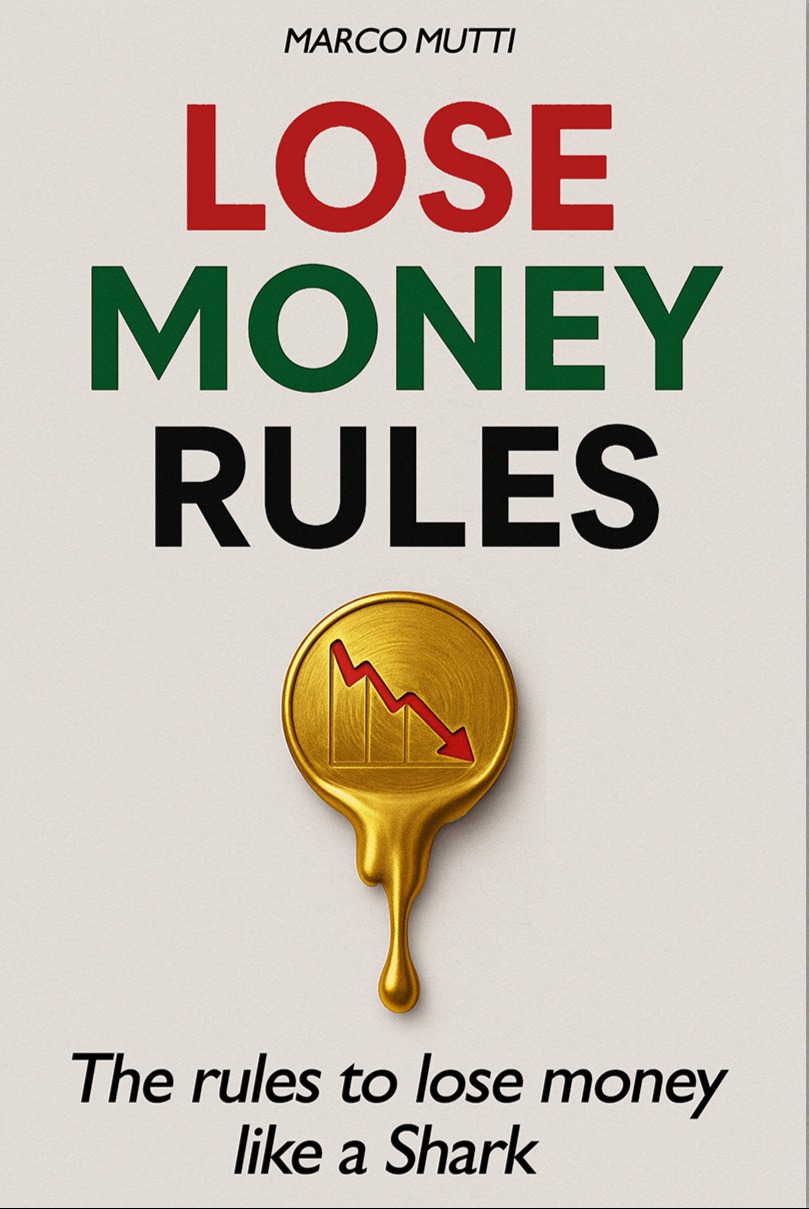
This is not another promise to beat the market. It is a book about bad decisions, ego, risk, borrowed money, false confidence — and what losing can teach you before it gets more expensive.
English · Italiano · EspañolPaperback + Kindle
Why this book
Because the hardest lessons usually arrive after the trade, the purchase, the debt, the confidence, or the story we told ourselves.
A falling price does not automatically make something cheap. A rising price does not automatically make you right.
The most dangerous risk is often believing you understand something that you have never really examined.
When money disappears, excuses get louder. The useful part begins when you stop protecting the story and inspect the decision.
Inside Lose Money Rules
Not a checklist for getting rich. A framework for recognizing the behavior that makes money disappear.
“The secret is not being the smartest.
It is being the most curious.”
From Lose Money Rules
Get the book
Choose paperback or Kindle. The main button automatically points to the edition that best matches your browser language.